ЖLIBRE CODEX
LibraryAbout
ЖLIBRE CODEX

Read non-fiction classics for free.

Discover

Library

Learn

About

© 2026 LIBRE CODEX

The texts on this site are in the public domain.
Any editorial content (descriptions, annotations, reading paths) is licensed under CC BY-NC-ND 4.0.

ЖLIBRE CODEX
LibraryAbout
ЖLIBRE CODEX

Read non-fiction classics for free.

Discover

Library

Learn

About

© 2026 LIBRE CODEX

The texts on this site are in the public domain.
Any editorial content (descriptions, annotations, reading paths) is licensed under CC BY-NC-ND 4.0.

ЖLIBRE CODEX
LibraryAbout
Library / Epictetus
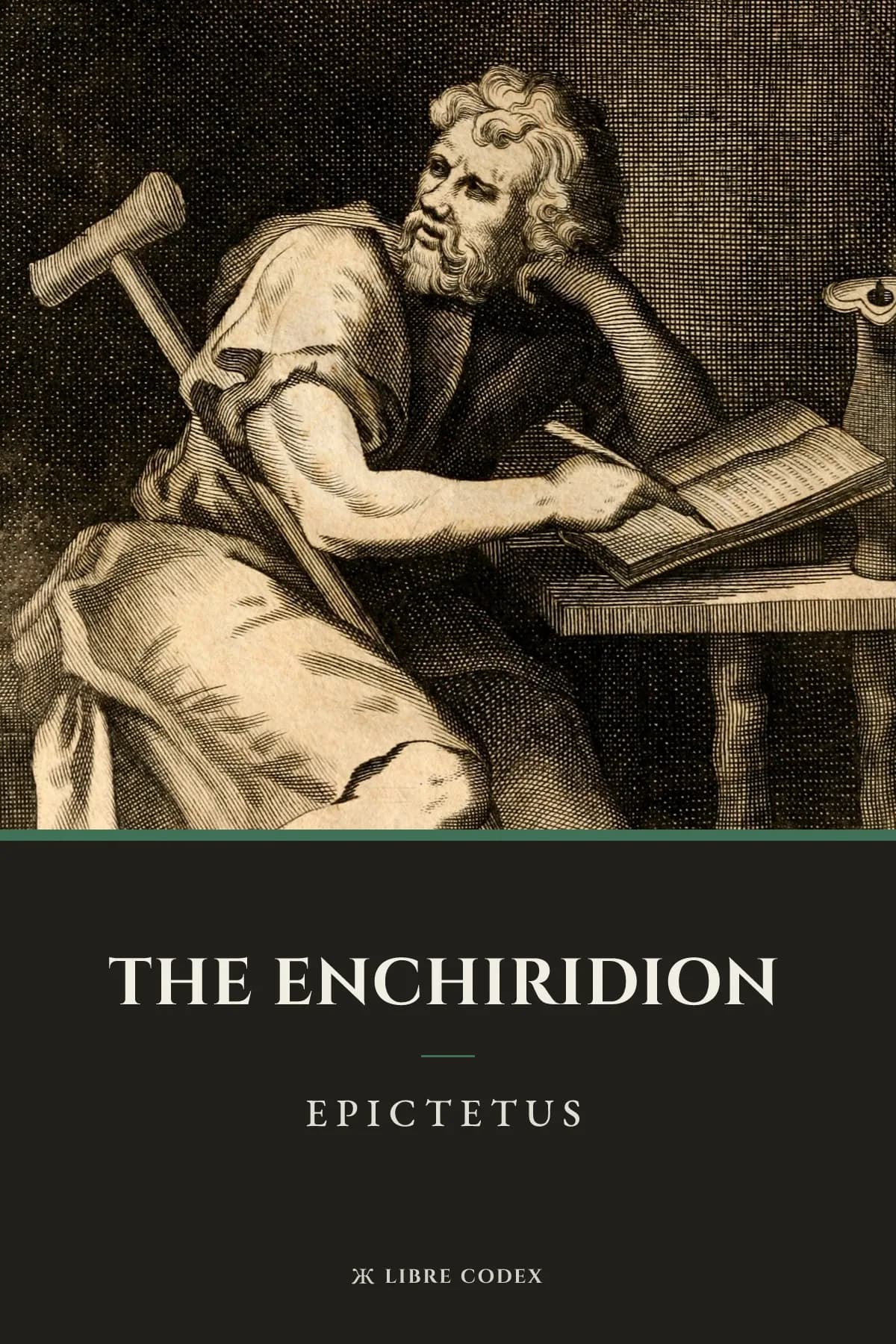
Cover of The Enchiridion

The Enchiridion

Epictetus · ancient · 7k words

A pocket manual of Stoic practice, compiled from the lectures of a philosopher born a slave. The Enchiridion — literally “handbook” — opens with the most useful sentence in ancient philosophy: some things are within our power, and some are not. Everything that follows is instruction in living by that distinction.

Start readingRead in: Thomas Wentworth Higginson (1865) · George Long (1877)

Contents

  1. The Enchiridion31 min

    What is in our power · You kiss a mortal · Disturbed by opinions, not things · Like a voyage: the captain calls · Wish for what happens · Disease impedes the body, not the will · 'Returned', not 'lost' · At life's banquet · An actor in the play · Death daily before your eyes · Rules for daily conduct · Every thing has two handles · Show your philosophy, don't speak it · How long will you wait? · Lead me, O Zeus and thou, Destiny

Text: Thomas Wentworth Higginson translation, 1865 — public domain · source

Cover art: frontispiece to Epicteti Enchiridion (Oxford, 1715) — public domain

ЖLIBRE CODEX

Read non-fiction classics for free.

Discover

Library

Learn

About

© 2026 LIBRE CODEX

The texts on this site are in the public domain.
Any editorial content (descriptions, annotations, reading paths) is licensed under CC BY-NC-ND 4.0.