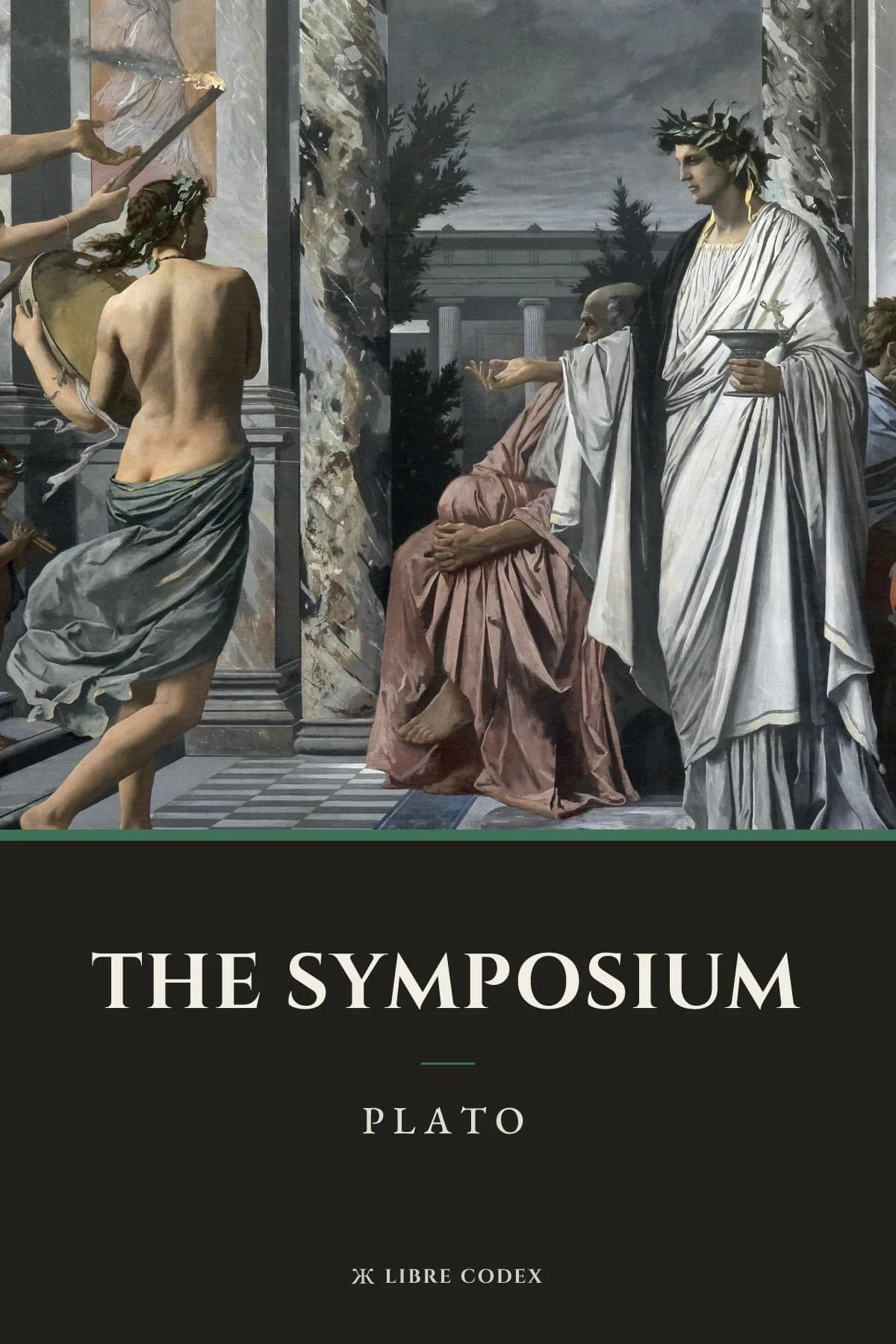
The Symposium
Plato · ancient · 24k words
A drinking party in honour of a poet, and the most beautiful thing Plato ever wrote about love. Seven guests each rise to praise Eros: the lawyer, the doctor, the comedian Aristophanes with his myth of the divided halves forever seeking their other, the tragedian Agathon, and finally Socrates, who reports the teaching of the priestess Diotima — the ascent from a single beautiful body up the ladder of love to Beauty itself. Then a drunken Alcibiades crashes in and delivers the strangest praise of all: of Socrates. Read section by section beside the Greek, on the Stephanus grid scholars have cited for five centuries.
Contents
- How the story came to be told3 min
- Socrates goes to the banquet4 min
- The plan: speeches in praise of Love4 min
- Phaedrus: the eldest of the gods6 min
- Pausanias and Eryximachus on Love15 min
- Aristophanes: the origin of Love10 min
- Agathon: the youngest and fairest god8 min
- Socrates questions Agathon6 min
- Diotima: the ascent to Beauty24 min
- Alcibiades bursts in4 min
- Alcibiades: in praise of Socrates17 min
- The revel breaks up2 min